How to Use a Gunna Type Beat in 2026: Inside MIG's "Professional" at 122 BPM in F# Minor
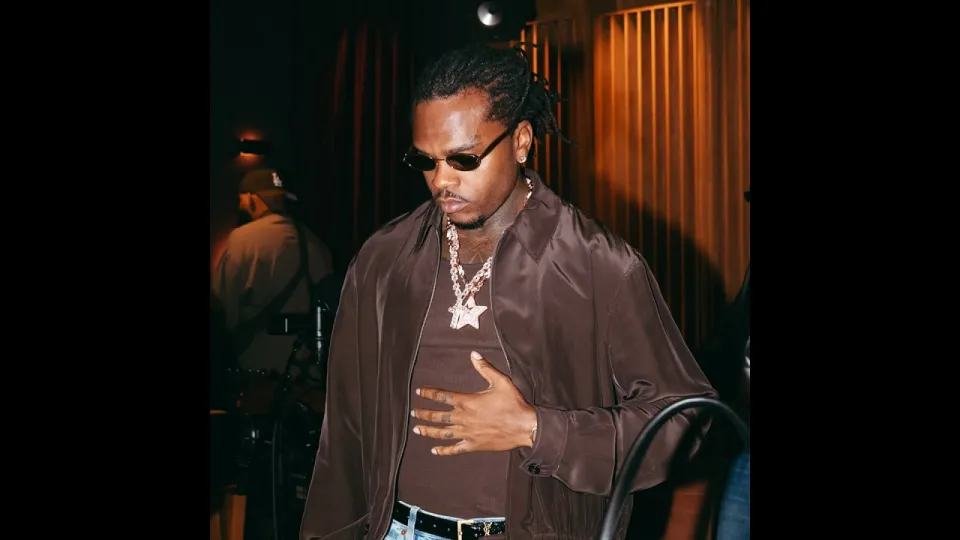
Video: [FREE] Gunna Type Beat - "Professional"
You can order the same kind of articles for your own video to boost it on YouTube and Google. Just message the Telegram bot @sat_sit_bot. The bot writes and publishes the articles itself (with your YouTube video embedded) on popular topical websites (no ads). Your first 50 articles are free.
· based on the channel MIG
A Gunna type beat is an instrumental built to match the tempo, mood and melodic language of Gunna's catalog so that an independent artist can record in that style without clearing a major-label sample or paying for a superstar's production. MIG's "Professional" is one of the clearest recent examples: 122 BPM in F# minor, a dark orchestral loop and sliding 808s, with the untagged license available through the BeatStars listing for "Professional".
What a Gunna type beat actually is and why producers label it that way
A Gunna type beat is a beat whose arrangement, tempo and chord choices are modeled on the records Gunna raps over, so the label describes a sonic template rather than an official collaboration. Gunna's recent projects lean on minor-key melodies, guitar and string loops, spacious drum patterns and 808s that glide between notes instead of sitting still, and producers tag their uploads with his name so rappers searching for that pocket can find them. The format is a search convention first and an artistic statement second: the tag tells a rapper what vocal cadence will fit before they even press play.
That convention has practical consequences. A type beat is usually sold as a lease with a defined BPM and key printed in the description, exactly as MIG does here, because a rapper needs to know the tempo before booking studio time and a singer needs the key before writing a hook. "Professional" lists 122 BPM and F# minor, which places it in the mid-tempo range where Gunna's most melodic material lives — fast enough for double-time hi-hat work, slow enough for triplet flows and long, held vocal runs.
Inside "Professional": 122 BPM, F# minor and the orchestral trap palette
The defining features of "Professional" are a minor-key orchestral loop, hard-hitting but clean drums and 808 slides that carry the low end between chord changes. Listeners responding to the upload consistently point to the same elements: the slide work on the bass, the density of the hi-hat rolls, the crispness of the drum mix and the darkness of the melody. Those four things are also the checklist most rappers use when judging whether a Gunna type beat is usable, because each one dictates a different part of the writing process.
Break the arrangement down and the roles are clear:
- The melodic loop sets the emotional register — dark and cinematic here, closer to orchestral trap than to the guitar-driven side of Gunna's catalog.
- The drums provide the pocket; crisp transients mean vocals can sit on top without heavy EQ carving.
- The 808 slides mark the transitions between sections, so verses and hooks need to be written around those movements rather than across them.
- The hi-hat rolls create internal rhythm, which rewards flows that leave space instead of filling every subdivision.
How to write and record on a 122 BPM Gunna type beat
Start by mapping the beat's sections before writing a single line, because a 122 BPM trap instrumental usually changes its melodic loop every eight bars and those changes dictate where a hook belongs. Loop the beat, count the bars, and mark where the 808 pattern shifts; those marks are your verse and chorus boundaries.
A practical workflow for this tempo:
- Set the project tempo to 122 BPM and record a reference pass of ad-libs only, to find where your voice naturally lands.
- Write the hook first. At 122 BPM a hook runs roughly eight bars, and Gunna-style hooks depend on repetition and melodic contour more than on lyrical density.
- Keep verses to triplet or double-time pockets and leave gaps where the hi-hat rolls are busiest — competing with the rolls is the most common mistake on this kind of beat.
- Track vocals with the beat at a comfortable monitoring level and resist the urge to add heavy processing; clean drums leave room for a dry, forward vocal.
- Mix the 808 against the vocal low end, since sliding bass notes and a deep voice occupy the same frequency range.
Because the key is F# minor, melodic rappers and singers should test their range before committing: the loop sits in a register that suits mid-range voices, and transposing the vocal a fourth or fifth can change the entire mood of the record.
Licensing: what the free download covers and what it does not
The free version of "Professional" is licensed for non-profit use only, and it cannot be uploaded to streaming services such as Spotify or Apple Music. That distinction matters more than any other detail on the page, because the most common disappointment for new artists is finishing a song on a free beat and then discovering it cannot be distributed commercially.
What the paid route provides:
- The untagged file, purchased through the BeatStars link, removes the producer tag and comes with a license that permits release.
- Adding three beats to the cart activates a discount, which is worth planning for if you intend to record an EP rather than a single.
- The free file remains the right choice for practice runs, freestyles, demos and social media snippets where no monetization is involved.
If a record built on the free version starts gaining traction, upgrade the license before any distribution — the cost of a lease is trivial compared with a takedown or a claim on a track that is starting to earn.
Common questions raised by listeners of this beat
Several recurring concerns come up around uploads like this one, and they are worth answering directly. The first is about the drums: the crispness and hi-hat density are deliberate production choices, not artifacts, and they are what make the beat read as "hard" on phone speakers. The second is about the melody: the dark, orchestral character comes from layered strings rather than a single synth, which is why the loop holds up when a rapper's vocal sits on top of it.
The third is about style fit. Listeners describe this kind of beat as suited to street anthems and to spinning, high-energy records, and that reflects the dual nature of Gunna's own catalog — melodic and menacing at once. A rapper can approach the same instrumental as a smooth melodic cut or as a harder, more aggressive record simply by changing the vocal delivery and the amount of space left in the flow. Producers and artists alike also ask whether the beat is genuinely usable without a feature; the answer is yes, since the arrangement leaves the center of the mix open for one voice.
Where "Professional" sits in the Gunna and Young Thug type beat landscape
The Gunna and Young Thug lane is crowded, and what separates a usable beat from a generic one is usually the low end and the drum mix rather than the melody. "Professional" leans on 808 slides that function almost as a second melodic voice, a trait shared with the more atmospheric records in Gunna's recent output and with the collaborative material he has made alongside Young Thug. Producers searching for One of Wun or The Last Wun style instrumentals will recognize the palette: minor-key strings, restrained percussion, and a bassline that moves rather than sustains.
For a rapper, that means the beat rewards restraint. The busiest element is the hi-hat pattern, so the strongest approach is a vocal that rides the pocket and lets the 808 slides do the melodic work underneath. For a producer, it is a reference point for how much low-end movement a 122 BPM trap beat can carry before the mix turns muddy.
Final thoughts on recording over this Gunna type beat
"Professional" is a well-built example of the modern Gunna type beat: 122 BPM, F# minor, an orchestral trap loop, crisp drums and 808 slides that give a writer clear cues for structure. Use the free file to sketch ideas and freestyle, then move to the untagged license before anything goes to streaming, and plan around the three-beat cart discount if you are building a project. The video breakdown and the beat itself come from the channel MIG, whose catalog stays close to the Gunna and Young Thug sound. When the song is ready, buy the untagged version of "Professional" on BeatStars and release it with a clean license behind it.
Key takeaways
- "Professional" by MIG runs at 122 BPM in the key of F# minor.
- The untagged license is sold via BeatStars at bsta.rs/lKzH8q, with a discount when three beats are added to the cart.
- The free download is limited to non-profit use and cannot be distributed on Spotify or Apple Music.
- Listeners single out the sliding 808s, hi-hat rolls, crisp drums and dark orchestral melody as the beat's defining features.
- The track is built in the Gunna and Young Thug lane, close to the One of Wun and The Last Wun era sound.
Source: [FREE] Gunna Type Beat - "Professional" · Markdown version
Questions & answers
What does the BPM and key of a Gunna type beat mean for a rapper?
The BPM tells you the tempo to set in your DAW and roughly how many bars a verse or hook will occupy; at 122 BPM a standard eight-bar hook feels relaxed but still moves. The key, F# minor in this case, tells you which register the melody sits in, so you can test whether your vocal range fits before writing.
Can I put a song made on the free version on Spotify?
No. The free download of "Professional" is licensed for non-profit purposes only and is explicitly not cleared for streaming services such as Spotify or Apple Music. You need the purchased untagged license before distributing the record commercially.
Why do the drums and hi-hat rolls sound so busy on this type of beat?
Dense hi-hat rolls are a signature of the Gunna and Young Thug production style, and they create internal rhythm that a vocal can play against. The drums themselves are mixed crisp and clean so that a vocal sits on top without heavy EQ work — the density is in the pattern, not in the tone.
Is this beat only for Gunna-style melodic rapping?
No. The dark orchestral melody and sliding 808s support both smooth melodic records and harder, more aggressive street anthems, depending on vocal delivery and how much space the flow leaves. The arrangement keeps the center of the mix open, so a single voice carries the track without a feature.